How Circular Bioeconomy Principles Can Transform Food and Beverage Manufacturing: A Business Growth Perspective
Introduction: Why the Circular Bioeconomy Is a Business Opportunity, Not Just a Sustainability Trend
For years, sustainability conversations in manufacturing were framed around compliance, environmental responsibility, and corporate social good. But the global shift toward a circular bioeconomy has changed the narrative entirely. Today, circularity is no longer a “green initiative”; it is a strategic business lever that directly influences profitability, operational resilience, and long‑term competitiveness.
For food and beverage manufacturers, especially SMEs, the circular bioeconomy represents one of the most powerful yet underutilised pathways to:
- reduce operational costs
- unlock new revenue streams
- improve resource efficiency
- strengthen supply chain resilience
- differentiate products in a crowded market
This article explores how circular bioeconomy principles can transform manufacturing performance, with a clear focus on business growth and financial returns, the angle that matters most to decision‑makers.
1. Understanding the Circular Bioeconomy: A Practical Definition for Manufacturers
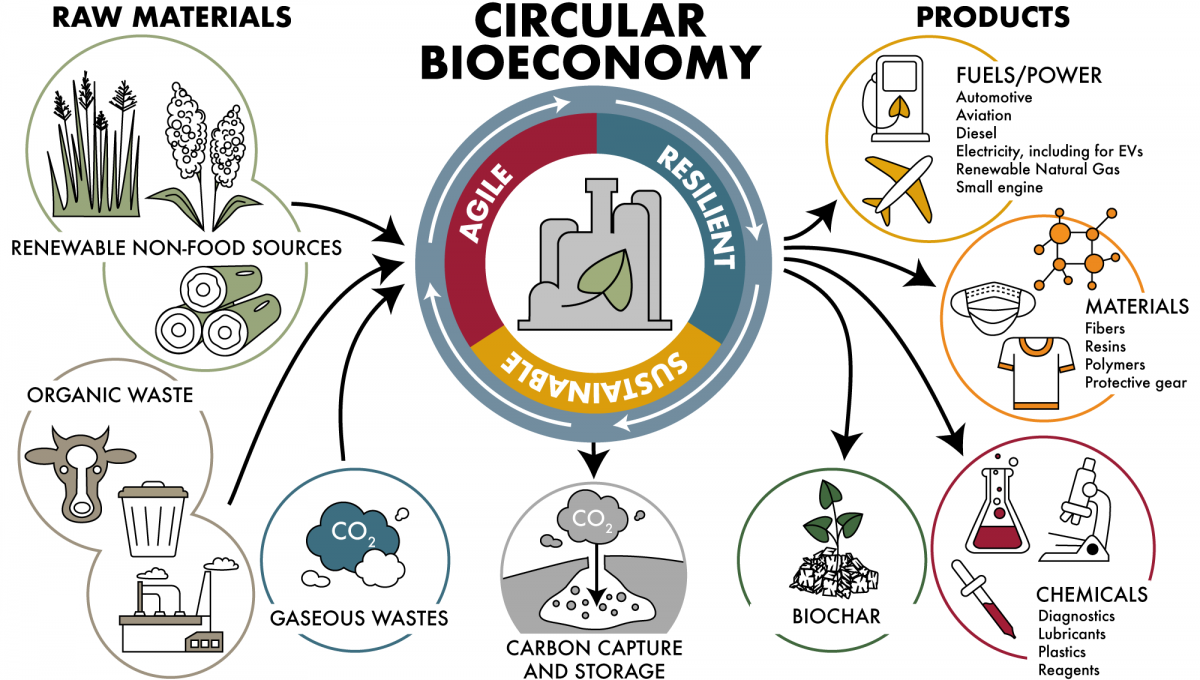
The circular bioeconomy is an economic model that uses biological resources (e.g., crops, by-products, organic waste) in a closed-loop system to maximise value, minimise waste, and regenerate natural systems.
In manufacturing terms, it means:
- Using raw materials more efficiently
- Reusing or repurposing by-products
- Turning waste into valuable inputs
- Designing processes that reduce losses
- Creating new products from existing streams
This is not theoretical. It is a practical, commercially viable framework that leading manufacturers are already using to reduce costs and increase margins.
2. The Business Case: How Circular Bioeconomy Drives Profitability
2.1. Cost Reduction Through Resource Efficiency
Raw materials account for 40–70% of total manufacturing costs in food and beverage operations. Circular bioeconomy principles help reduce this through:
- optimised material utilisation
- reduced waste at each processing stage
- improved yield through process optimisation
- better energy and water efficiency
Even a 1–3% improvement in yield can translate into hundreds of thousands of pounds in annual savings for mid-sized plants.
2.2. New Revenue Streams Through Waste Valorisation
Food and beverage manufacturers generate significant by-products, such as spent grains, fruit peels, whey, trimmings, starch residues, and more. Traditionally, these are treated as waste.
Circular bioeconomy thinking reframes them as assets.
Examples of valorisation opportunities include:
- converting spent grains into high-protein flour
- turning fruit peels into natural flavour extracts
- transforming whey into high-value protein concentrates
- producing biofertilisers from organic residues
- creating bioenergy from waste streams
These are not niche ideas; they are commercially proven models used by innovative SMEs and global brands alike.
2.3. Reduced Exposure to Volatile Raw Material Prices
Circular systems reduce dependency on virgin raw materials. This protects manufacturers from:
- price fluctuations
- supply chain disruptions
- geopolitical risks
- climate-related shortages
In a world where supply chain volatility is the new normal, circularity becomes a risk‑mitigation strategy.
2.4. Premium Pricing Through Sustainable Product Positioning
Consumers increasingly reward brands that demonstrate:
- transparency
- sustainability
- responsible sourcing
- reduced environmental impact
Circular bioeconomy practices enable manufacturers to justify premium pricing, especially in categories like:
- craft beverages
- plant‑based foods
- functional ingredients
- organic and natural products
This is a direct pathway to margin expansion.
3. Practical Circular Bioeconomy Strategies for Food & Beverage Manufacturers
3.1. Conducting a By-Product and Waste Stream Audit
This is the first step Buklam often recommends.
A structured audit identifies:
- where waste is generated
- the quantity and quality of by-products
- potential valorisation pathways
- cost-saving opportunities
- regulatory considerations
Most manufacturers are surprised by how much value they are losing daily.
3.2. Implementing Process Optimisation for Yield Improvement
Circularity begins with efficiency.
Key interventions include:
- reducing overprocessing
- improving temperature and time controls
- minimising product losses during changeovers
- optimising filtration, separation, and extraction steps
- improving cleaning-in-place (CIP) efficiency
These improvements deliver immediate financial returns.
3.3. Partnering with Local Bio-Based Innovators
Manufacturers don’t need to build new facilities to valorise waste.
Partnerships can enable:
- co-processing
- ingredient extraction
- fermentation-based valorisation
- composting and biofertiliser production
- energy generation
This reduces capital expenditure while unlocking new revenue.
3.4. Integrating AI and Digital Tools for Resource Efficiency
AI-powered solutions, an area where Buklam excels, can optimise:
- energy usage
- water consumption
- raw material dosing
- predictive maintenance
- process variability
Digital transformation amplifies circularity by making operations smarter and more predictable.
4. Case Examples: Circular Bioeconomy in Action
Example 1: Brewery Spent Grain to High-Protein Flour
A mid-sized brewery reduced waste disposal costs by 60% and created a new revenue stream by partnering with a food ingredient company.
Example 2: Fruit Processing Plant Turning Peels into Extracts
A juice manufacturer increased annual revenue by £250,000 by converting citrus peels into natural flavour oils.
Example 3: Dairy Processor Transforming Whey into Value-Added Products
Instead of discarding whey, a dairy SME now produces whey protein concentrate, boosting profitability significantly.
These examples demonstrate that circularity is not theoretical; it is commercially proven.
5. How SMEs Can Start Their Circular Bioeconomy Journey
SMEs often assume circularity is expensive or complex. In reality, the journey can begin with low-cost, high-impact steps:
- conduct a waste audit
- identify quick-win valorisation opportunities
- optimise existing processes
- explore partnerships
- integrate simple digital tools
- train teams on circular thinking
Buklam’s advisory model is designed to help SMEs start small, scale fast, and achieve measurable financial results.
6. The Role of Buklam Integrated Services Limited
Buklam supports manufacturers through:
✔ Waste and by‑product valorisation strategy
Identifying new revenue streams from existing operations.
✔ Process optimisation and operational excellence
Improving yield, reducing waste, and enhancing efficiency.
✔ AI-powered manufacturing transformation
Using digital tools to optimise resource use and reduce costs.
✔ Sustainability-driven business model innovation
Helping companies build profitable, future-ready operations.
✔ Training and capability development
Empowering teams to adopt circular thinking.
If you’re a food or beverage manufacturer looking to reduce costs, unlock new revenue streams, and build a more resilient business model, Buklam can help you turn circular bioeconomy principles into measurable financial results.
Book a consultation today and start transforming your operations.